
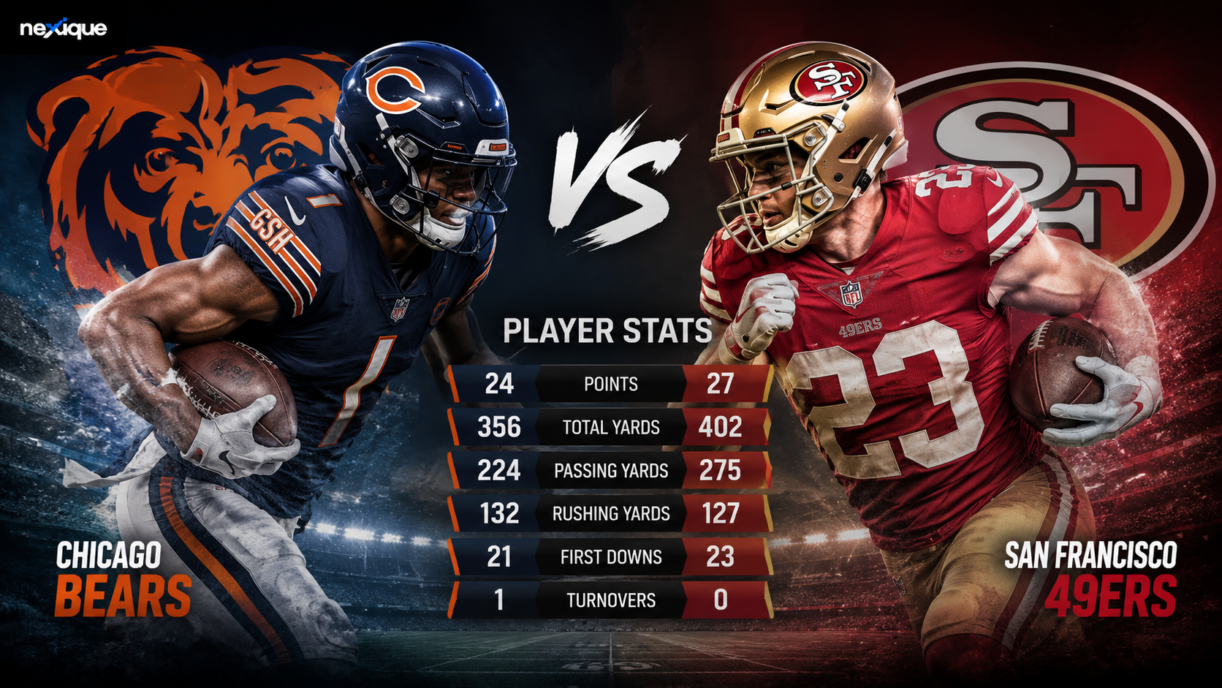
The Chicago Bears vs 49ers match player stats always attract attention because these two historic NFL franchises bring intensity, physicality, and tactical football whenever they meet. Fans and analysts alike closely examine every passing yard, rushing attempt, tackle, interception, and touchdown to understand how individual performances influence the final score. Whether the matchup takes place during the regular season or carries playoff implications, player statistics reveal the true story behind every drive and defensive stand.
Looking beyond the scoreboard, the Chicago Bears vs 49ers match player stats highlight which athletes stepped up in critical situations. Quarterbacks showcase their passing accuracy, running backs demonstrate their ability to control the clock, receivers fight for every yard after the catch, and defenders create momentum-changing plays. These numbers provide valuable insight into team strategy, execution, and overall performance throughout the game.
Quarterback Performance Shapes the Contest
Quarterbacks naturally receive the most attention because every offensive possession begins with their decisions. During a competitive Bears and 49ers matchup, passing efficiency often determines which team gains control early. Completion percentage, passing yards, touchdown passes, and interceptions collectively illustrate how effectively each quarterback managed the offense.
The Bears’ quarterback focused on quick, efficient throws designed to move the chains while limiting mistakes. Short and intermediate routes helped maintain offensive rhythm, especially against San Francisco’s aggressive defensive front. Accurate timing allowed receivers to create additional yardage after the catch, extending drives and keeping the defense on the field.
Meanwhile, the 49ers’ quarterback displayed remarkable composure under pressure. Strong pocket awareness and intelligent decision-making enabled consistent offensive production even when Chicago generated pass rush opportunities. Deep throws mixed with precise short passes forced the Bears’ secondary to defend every level of the field, creating opportunities for explosive plays.
Both quarterbacks demonstrated leadership beyond their statistical production. Audible adjustments, clock management, and situational awareness became equally important as passing numbers. Their performances reflected preparation, confidence, and the ability to adapt throughout the game.
Running Backs Control Offensive Momentum
Running backs played a significant role in determining field position and time of possession. The Bears relied heavily on establishing a balanced rushing attack to reduce defensive pressure on their quarterback. Consistent gains on first and second down created manageable third-down situations, improving overall offensive efficiency.
Power running between the tackles complemented outside rushing attempts designed to stretch the Chicago Bears vs 49ers match player stats‘ defensive alignment. Breaking tackles and gaining extra yards after contact illustrated the determination of Chicago’s rushing unit.
San Francisco answered with its own dynamic ground game. The 49ers utilized multiple running backs, allowing fresh legs to maintain intensity throughout the contest. Their offensive line consistently created running lanes, enabling explosive gains that shifted momentum in critical moments.
Receiving contributions from running backs added another dimension to the offense. Screen passes, swing routes, and check-down receptions generated valuable yardage while slowing the opposing pass rush. These versatile performances emphasized how modern NFL offenses rely on complete running backs capable of contributing in multiple ways.
Wide Receivers Deliver Game-Changing Plays
Wide receivers remained central to the offensive game plans for both organizations. Every reception represented not only yardage gained but also trust between quarterback and receiver under pressure.
Chicago’s receiving corps displayed excellent route running and reliable hands. Several crucial third-down receptions extended drives, while contested catches highlighted impressive concentration in tight coverage. Speed on the perimeter forced San Francisco’s defensive backs to remain disciplined throughout the contest.
The 49ers countered with an equally dangerous group of pass catchers capable of producing explosive gains after every reception. Their receivers consistently created separation through crisp route execution and intelligent positioning against man and zone coverage.
Yards after catch became one of the most influential statistical categories. Instead of simply catching passes, receivers transformed short completions into significant gains through vision, acceleration, and physical toughness. Those extra yards frequently changed field position and increased scoring opportunities.
Chemistry between quarterbacks and receivers proved essential throughout the matchup. Timing routes executed with precision allowed offenses to maintain rhythm despite defensive adjustments.
Tight Ends Add Balance to the Offense
Although wide receivers often generate headlines, tight ends quietly produced valuable contributions during the contest. Their versatility allowed offensive coordinators to disguise formations while maintaining flexibility in both the passing and running game.
Chicago’s tight end delivered dependable receptions in traffic while also contributing as an effective blocker. His ability to secure difficult catches across the middle provided a reliable target whenever defensive pressure limited deeper passing opportunities.
San Francisco’s tight end demonstrated why the position has become increasingly valuable in today’s NFL. Physical blocking supported the running game, while athletic receiving skills created mismatches against linebackers and safeties. Several important first downs resulted directly from his dependable play.
Red-zone efficiency improved because tight ends offered larger catch radiuses near the goal line. Their combination of size, strength, and reliable hands made them ideal targets during crucial scoring drives.
Offensive Line Performance Determines Success
Every impressive offensive statistic begins with effective line play. The offensive lines for both teams battled relentlessly against talented defensive fronts, making protection and run blocking essential components of the overall game.
Chicago’s offensive line showed resilience despite facing one of the league’s most physical defensive units. Pass protection improved as the game progressed, allowing the quarterback additional time to survey the field. Communication between linemen minimized assignment errors and reduced negative plays.
Run blocking also demonstrated consistent improvement. Double teams at the point of attack created opportunities for running backs to reach the second level, increasing rushing production as the contest continued.
San Francisco’s offensive line displayed outstanding discipline and technical execution. Their coordinated blocking schemes opened significant rushing lanes while providing stable pass protection against Chicago’s defensive pressure packages.
The battle in the trenches often determined which offense sustained long drives. Winning individual matchups allowed both teams to establish rhythm and dictate the tempo during key stretches of the game.
